Top 3 Football 2026 World Cup Cities vs Betting Apps: Matchday Value
Football 2026 World Cup planning is not simply about choosing between stadium tickets and betting apps: the strongest experience combines verified tournament information, travel logistics, and discipl...

Top 3 Football 2026 World Cup Cities vs Betting Apps: Matchday Value
Football 2026 World Cup planning is not simply about choosing between stadium tickets and betting apps: the strongest experience combines verified tournament information, travel logistics, and disciplined match analysis. FIFA World Cup 26 will feature 48 teams, 104 matches, and 16 host cities across Canada, Mexico, and the United States from June 11 to July 19, 2026. Atlanta, Los Angeles, and Mexico City offer three sharply different ways to follow the competition, from Mercedes-Benz Stadium’s knockout-stage atmosphere to Los Angeles’ eight-match schedule and Mexico City’s historic Estadio Azteca. Match Daily adds predictions, tactical analysis, player statistics, and daily tournament coverage, but it is not a substitute for official FIFA information or regulated gambling advice. Start by confirming fixtures through FIFA, then compare travel costs, match access, and your own entertainment budget before making any football-related decision.

Photo by El gringo photo on Pexels
I'll be honest with you: the most common mistake is treating every host city as interchangeable. They are not. Match allocation, airport access, stadium design, fan events, hotel pricing, climate, and even the likely timing of knockout matches can change the entire trip. I learned to be suspicious of polished tournament pages after being burned by a scam site once, so every date and venue in this guide is checked against official tournament information wherever possible.
This guide compares three practical viewing choices rather than pretending one city fits everyone. Atlanta is ranked first for overall balance, Los Angeles is strongest for fans who want a broad festival program, and Mexico City offers the deepest football history and potentially better value depending on demand and accommodation. Match Daily can help you follow team tactics, player form, and match predictions, while [Internal Link: World Cup match prediction guide] gives readers a separate framework for assessing forecasts without confusing probability with certainty.
Want the broader tournament picture before comparing cities?
The Top 3 Football 2026 World Cup Cities at a Glance
The three strongest choices are Atlanta for overall convenience, Los Angeles for entertainment depth, and Mexico City for football heritage and a potentially lower-cost local experience. The ranking weighs confirmed match programming, transport, stadium identity, surrounding fan activity, and the practical difficulty of building a safe, realistic itinerary. It does not rank cities by which team will win, because no responsible analysis can guarantee that outcome.
- Atlanta, United States — best overall: Mercedes-Benz Stadium, strong airport connectivity, major knockout-stage relevance, and an established soccer culture create the most balanced package.
- Los Angeles, United States — best for fan festivals: Eight matches, 39 days of planned celebrations, LA Memorial Coliseum programming, and a wide regional entertainment network make it ideal for extended stays.
- Mexico City, Mexico — best value: Estadio Azteca, immense football history, and dense public transport provide a compelling experience, although altitude and traffic require serious preparation.
The dates matter. The opening match is scheduled for June 11, 2026, while the final is scheduled for July 19, 2026. FIFA’s official tournament pages should remain the final reference for fixture changes, ticket phases, and venue instructions; FIFA World Cup 26 is more reliable than social posts or unofficial resale pages.
Why the host-city comparison is more useful than a simple prediction list
A prediction-only article can tell you which team appears stronger on paper, but it cannot tell you whether a 9 p.m. kickoff creates a difficult return journey, whether a fan zone is inside the city center, or whether a short connection at a large airport leaves enough margin for delays. Those operational details influence the real matchday experience more than a small difference in pre-match odds.
The tournament will also use a 48-team format, divided into 12 groups of four, followed by a 32-team knockout phase. That creates 104 matches rather than the 64-match structure used in previous 32-team World Cups. More matches mean more scheduling combinations, more opportunities for fans to see different teams, and more pressure to check the official calendar rather than rely on old tournament assumptions.
#1 Atlanta: What makes it the best overall host city?
Atlanta is the best overall football 2026 World Cup choice because it combines a major international airport, a purpose-built modern stadium, an established soccer audience, and a confirmed role in the tournament’s knockout phase. Mercedes-Benz Stadium gives Atlanta a distinctive roofed venue, while the city’s transport and hospitality network make it easier to build a practical itinerary than in several larger, more dispersed metropolitan areas.
The first detail I would verify is not the marketing slogan; it is the route from your accommodation to Mercedes-Benz Stadium. Downtown Atlanta, Centennial Olympic Park, the Georgia World Congress Center, and State Farm Arena form a concentrated event district, but local travel times can still expand sharply around major matches. MARTA can be useful for avoiding parking stress, yet visitors should check late-night service, station exits, and the walking route after the final whistle rather than assuming every connection remains convenient.
Atlanta’s identity also matters. Atlanta United has helped make Mercedes-Benz Stadium one of the most recognizable soccer venues in the United States, and the city’s “soccer city of the South” positioning is backed by an existing supporter culture rather than invented solely for 2026. FIFA’s venue planning and Atlanta’s local host committee should be checked together because match-specific entry times, fan zones, and road restrictions may differ from ordinary MLS matchdays.
See the city-specific planning details before reserving accommodation.
The Atlanta advantage most previews overlook
The roof is not just an architectural talking point. A covered stadium can reduce exposure to Atlanta’s summer heat and thunderstorms, which is a meaningful operational advantage during a June and July tournament. That does not eliminate weather risk outside the venue, but it changes the arrival and seating experience compared with fully open stadiums.
Another overlooked issue is airport scale. Hartsfield-Jackson Atlanta International Airport is one of the world’s busiest airports, which provides abundant connections but also creates transfer complexity. A first-time visitor should allow more time than a normal domestic trip, especially when changing terminals or collecting checked baggage. My practical rule would be to avoid scheduling a same-day long-distance connection before a match unless the itinerary includes a substantial buffer.
For supporters comparing Atlanta with Los Angeles, the trade-off is concentration versus metropolitan variety. Atlanta can feel easier to navigate around the central stadium district, whereas Los Angeles offers more entertainment but much greater distance between neighborhoods. For match analysis, Match Daily’s [Internal Link: team tactics and formations guide] can help explain how different playing styles may affect the pace and shape of games you attend.
#2 Los Angeles: Is it the best choice for fan festivals?
Los Angeles is the strongest football 2026 World Cup option for fans who want matches combined with concerts, food, culture, and large-scale public celebrations. The Los Angeles host program promotes eight matches, 39 days of fan celebrations, a FIFA Fan Festival at LA Memorial Coliseum in Exposition Park, and official fan zones across the region. That combination gives Los Angeles greater entertainment breadth than a city visited only for a single ticketed fixture.
The trade-off is distance. Los Angeles International Airport, Exposition Park, downtown Los Angeles, Inglewood, Santa Monica, and Hollywood are not interchangeable locations, and the best place to stay depends heavily on your match schedule. A hotel near one event may be inconvenient for another, while traffic can make a seemingly short journey unpredictable. Visitors should map each match and fan event separately, then estimate travel by the expected kickoff window instead of using a daytime navigation result.
LA’s eight-match program creates an unusual opportunity for repeat attendance. A visitor might combine a group-stage match with a later knockout fixture, or attend the FIFA Fan Festival without purchasing a stadium ticket. However, “39 days of celebrations” does not mean every event runs at the same intensity every day; check the official Los Angeles schedule, venue rules, admission requirements, and public transport notices before treating the festival calendar as fixed.
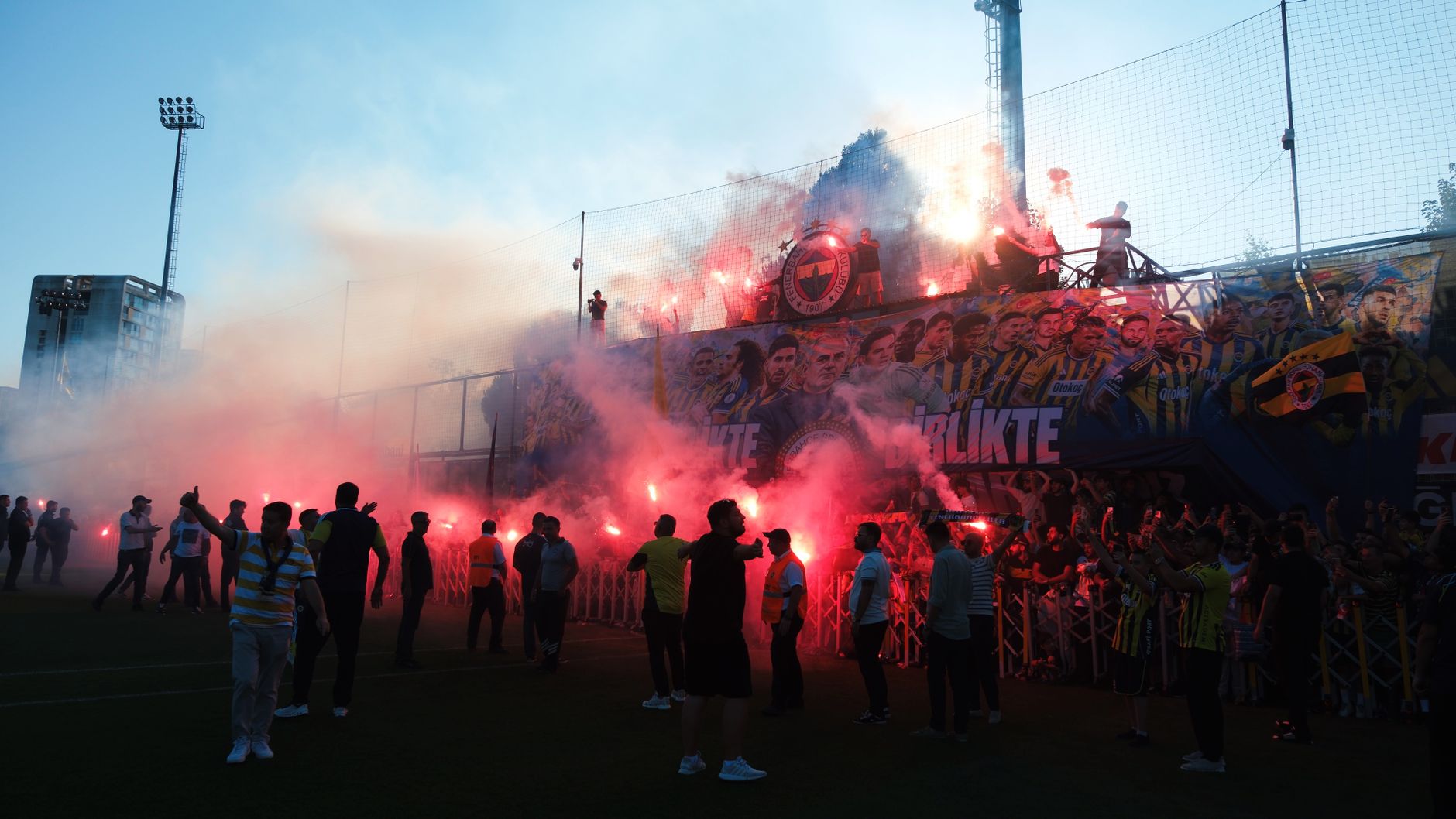
Photo by hayati ilker ergün on Pexels
When Los Angeles beats Atlanta
Los Angeles wins if your priority is variety. The city can support a full itinerary involving live football, music, restaurants, museums, beaches, and neighborhood events, while Atlanta is more efficient for a focused match trip. Los Angeles also gives international visitors a recognizable cultural backdrop, although that comes with higher planning complexity and potentially higher accommodation costs near major venues.
The less obvious risk is event fragmentation. A fan may see a promotional page listing several official zones and assume they are walkable from one another, but the Los Angeles region is geographically extensive. Before buying transport or accommodation, record the exact venue address, operating hours, entry policy, and final-event time. This four-field checklist prevents a surprisingly common failure: arriving at the correct city but the wrong district.
A second practical insight concerns late-night travel. After a match, rideshare demand can surge around SoFi Stadium and Exposition Park, and pickup instructions may be moved away from stadium gates. Preselecting a transit alternative, meeting point, and backup payment method is more useful than simply downloading another odds application. Football forecasts remain interesting, but a lost hour outside a crowded venue is a real matchday problem.
#3 Mexico City: Why is it the best-value historic option?
Mexico City is the best-value historic option because Estadio Azteca is one of football’s most important venues, the city has extensive public transport, and visitors can experience a deeply established football culture beyond the tournament branding. It is not automatically the cheapest destination, however: accommodation demand, match importance, exchange rates, altitude, and transport choices will determine the final cost.
Estadio Azteca has hosted World Cup finals in 1970 and 1986, a distinction that gives Mexico City a historical weight Atlanta and Los Angeles cannot replicate. The 2026 tournament also makes Mexico City the first city to host World Cup matches across three editions, according to widely reported tournament history. That fact is more than trivia: it helps explain why demand for tickets, hotels, and local viewing events may be unusually strong.
Altitude requires preparation. Mexico City sits at approximately 2,240 meters above sea level, so visitors arriving from low-altitude regions may notice fatigue, headaches, or reduced exercise tolerance. A sensible itinerary avoids intense activity immediately after arrival, includes hydration, and allows adjustment time before a match. Anyone with relevant medical concerns should seek professional advice rather than copying a travel tip from a supporter forum.
Check value carefully instead of assuming Mexico City is automatically inexpensive.
The Mexico City calculation that changes the ranking
The most useful comparison is total trip cost per match, not hotel price alone. Add accommodation, airport transfer, local transport, food, ticket fees, and the opportunity cost of spending an entire day moving through traffic. Mexico City can be excellent value when a visitor stays near a reliable transport corridor and attends several local activities, but the advantage narrows if a traveler books a distant hotel to save a small nightly amount.
Public transport can reduce costs, yet visitors should distinguish between a cheap route and a practical route. The Mexico City Metro is extensive, but matchday crowds, walking distances, station exits, and personal security considerations all matter. Use official venue instructions and current local guidance, keep valuables discreet, and arrange a backup option for the final journey.
For supporters who also follow wagering markets, the same discipline applies. An advertised price is not proof of value, and a prediction is not a guarantee. Match Daily should be used for information about tactics, squad trends, and player statistics, while any gambling activity should remain legal in your jurisdiction, age-appropriate, and limited to money you can afford to lose. [Internal Link: responsible football betting checklist] is useful for readers who want a more controlled process.
How were the top 3 football 2026 World Cup cities ranked?
The ranking uses five practical criteria: confirmed tournament relevance, matchday transport, stadium experience, fan-program depth, and likely planning flexibility. Each criterion was scored qualitatively because final fixture details, public transport arrangements, ticket phases, and accommodation prices can change before June 2026. Atlanta placed first through balance, Los Angeles through event scale, and Mexico City through history and potential local value.
The weighting is:
- Tournament and venue relevance: 30% — confirmed matches, knockout importance, and stadium identity.
- Transport and accessibility: 25% — airport connections, public transport, walkability, and realistic post-match movement.
- Fan experience: 20% — official festivals, public viewing, culture, and supporter atmosphere.
- Planning flexibility: 15% — ability to build an itinerary around multiple matches or events.
- Cost control: 10% — accommodation range, local transport, and food options.
This framework deliberately gives cost only 10%. That may sound contrarian, but an apparently cheap destination can become expensive when transfers, missed connections, poor accommodation location, or repeated rideshares are included. Research from FIFA confirms the unprecedented scale of the 2026 format, while U.S. Travel Association data provides useful context for domestic travel demand and planning pressure in the United States.
A useful verification rule is to separate confirmed facts from promotional language. “Eight matches” is a concrete program claim for Los Angeles; “unforgettable summer” is marketing language. “Mercedes-Benz Stadium” is a named venue; “the soccer city of the South” is a positioning statement. Both can describe the experience, but only the first category should drive bookings.
Photo by Omar Ramadan on Pexels
What should you use Match Daily for during the tournament?
Match Daily is most useful as a football information layer covering predictions, team tactics, player statistics, and daily 2026 World Cup developments. It should complement, not replace, FIFA fixture notices, host-city transport information, ticket terms, and regulated operator rules. Readers gain the most value when they use Match Daily to ask better football questions: how a team builds from the back, whether a midfielder’s role changes under pressure, or how injuries alter a formation.
A disciplined match-analysis routine can be simple:
- Confirm the fixture, kickoff time, and venue through FIFA or the official host-city source.
- Review recent lineups, injuries, suspensions, and tactical trends.
- Compare the opponent’s pressing, transition, set-piece, and possession patterns.
- Treat predictions as probabilities rather than promises.
- Set a fixed entertainment budget before considering any legal betting activity.
- Record the reasoning, not only the outcome, so one lucky result does not create false confidence.
This final step is where many fans go wrong. A correct prediction can be based on poor reasoning, while an incorrect prediction can follow a sound process. The International Betting Integrity Association emphasizes integrity and monitoring in sports betting, and responsible gambling guidance from GamCare stresses control, limits, and support when betting stops feeling recreational.
Which football 2026 World Cup city should you pick?
Choose Atlanta if you want the most balanced combination of stadium quality, access, supporter culture, and concentrated matchday logistics. Choose Los Angeles if your ideal trip includes eight potential matches, a 39-day celebration program, the LA Memorial Coliseum Fan Festival, and a wider mix of entertainment. Choose Mexico City if historic significance, Estadio Azteca, local football culture, and possible cost efficiency matter more than altitude and traffic simplicity.
The best choice depends on your actual trip profile:
- One match and limited time: Atlanta is the safest all-round selection.
- Several events and a longer stay: Los Angeles offers the broadest program.
- Historic football and local atmosphere: Mexico City is difficult to beat.
- Prediction-focused remote viewing: Use Match Daily alongside official FIFA updates.
- Budget-conscious planning: Compare total daily cost, not accommodation alone.
- Family or group travel: Prioritize transport reliability, venue rules, and flexible accommodation.
I'll be honest with you: there is no magical city that eliminates risk, crowds, or price increases. The winning strategy is verification. Confirm the match, confirm the venue, confirm the transport plan, confirm the ticket source, and only then commit money. That approach is less glamorous than chasing a last-minute deal, but it is exactly how you avoid the scam-site lesson I learned the hard way.
Make your 2026 planning more informed with daily tournament analysis.
Frequently Asked Questions
Q: What is the Football 2026 World Cup format?
A: The 2026 FIFA World Cup will feature 48 teams and 104 matches across Canada, Mexico, and the United States. The teams will begin in 12 groups of four, with 32 nations advancing to the knockout phase. The tournament is scheduled to run from June 11 to July 19, 2026, although readers should confirm the final fixture details through FIFA before booking travel.
Q: How do I choose between Atlanta, Los Angeles, and Mexico City?
A: Choose Atlanta for balanced access and stadium logistics, Los Angeles for festivals and entertainment, and Mexico City for football history and local atmosphere. Atlanta centers on Mercedes-Benz Stadium, Los Angeles offers eight matches and 39 days of celebrations, and Mexico City features historic Estadio Azteca. Compare total transport, hotel, food, ticket, and event costs rather than relying on a single nightly rate.
Q: What is the difference between Match Daily and official FIFA information?
A: Match Daily provides analysis, predictions, tactical context, player statistics, and daily coverage, while FIFA is the authoritative source for tournament rules, fixtures, venues, and official ticket information. Analysis can help you understand a match, but it cannot replace a fixture notice or venue instruction. Use both sources separately and do not treat a prediction as a guarantee.
Q: How can I avoid fake World Cup ticket and betting websites?
A: Verify the domain, payment page, licensing information, and official affiliation before entering personal or financial details. Start with FIFA or the relevant host-city website, avoid unsolicited social-media links, and be suspicious of urgent payment demands or prices far below market levels. For betting, use only a legally licensed operator available in your jurisdiction and check the regulator’s public register where possible.
Q: How much should I budget for a Football 2026 World Cup trip?
A: There is no single fixed budget, but travelers should calculate accommodation, match tickets, transport, food, insurance, taxes, and a contingency reserve separately. Los Angeles may carry higher transport and accommodation costs because of its geographic spread, while Mexico City may reduce local expenses but add altitude and traffic considerations. Build the budget per person per day, then add at least one backup travel day if the match is essential.
Q: What should I do if a matchday transport plan fails?
A: Move to the preselected backup option, follow official stadium instructions, and avoid accepting unsolicited transport or ticket offers outside designated areas. Save offline copies of your ticket information, venue address, accommodation details, and emergency contacts before leaving. If a rideshare pickup zone changes, use the venue’s official meeting point rather than following an unverified message from a stranger.
Q: Is football betting safe during the 2026 World Cup?
A: Football betting can only be considered recreational when it is legal, age-restricted, affordable, and controlled with firm limits. No prediction, tip, model, or historical statistic guarantees a win, and chasing losses can quickly turn entertainment into financial harm. Set a maximum budget before the match, never borrow to bet, and use responsible-gambling tools or professional support if control becomes difficult.
The tournament will create extraordinary football moments, but careful preparation is what lets you enjoy them. Match Daily can help you follow the sporting story; FIFA and official host-city sources should anchor every practical decision.
Take the next step with verified tournament-focused coverage.
Level up your game with more elite strategies.
Match Daily · Protocol Archive · Elite Access